About Quandle.xyz
Quandle.xyz is Nathan Luevano’s small place on the web: part portfolio, part technical notebook, and part experiment in making mathematics do useful visual work. It is deliberately quiet. The pages carry the writing; the attractors provide continuity, motion, and a little uncertainty.
The name comes from the quandle, an algebraic structure used in knot theory. A quandle describes
an operation that behaves well when one strand of a knot passes around another. That felt right for
a site concerned with systems, security, mathematical structure, and the paths information takes.
The .xyz is both the domain ending and a nod to the three coordinates behind every drawing here.
How the site is made
The site is generated as static HTML by Astro. Articles are Markdown, equations become semantic MathML during the build, and code highlighting is also completed before deployment. There is no application server and no client-side framework carrying the pages.
The drawings begin differently. Each is the numerical solution of an autonomous differential equation
The build integrates that equation with the fourth-order Runge–Kutta method, discards an initial warm-up interval, normalizes the remaining three-dimensional trajectory, and stores compact binary coordinates. The browser downloads only the randomly selected drawing. Scroll progress determines how much of its path is visible and how far its three-dimensional camera has turned; time alone does nothing.
The fifteen systems
Lorenz system
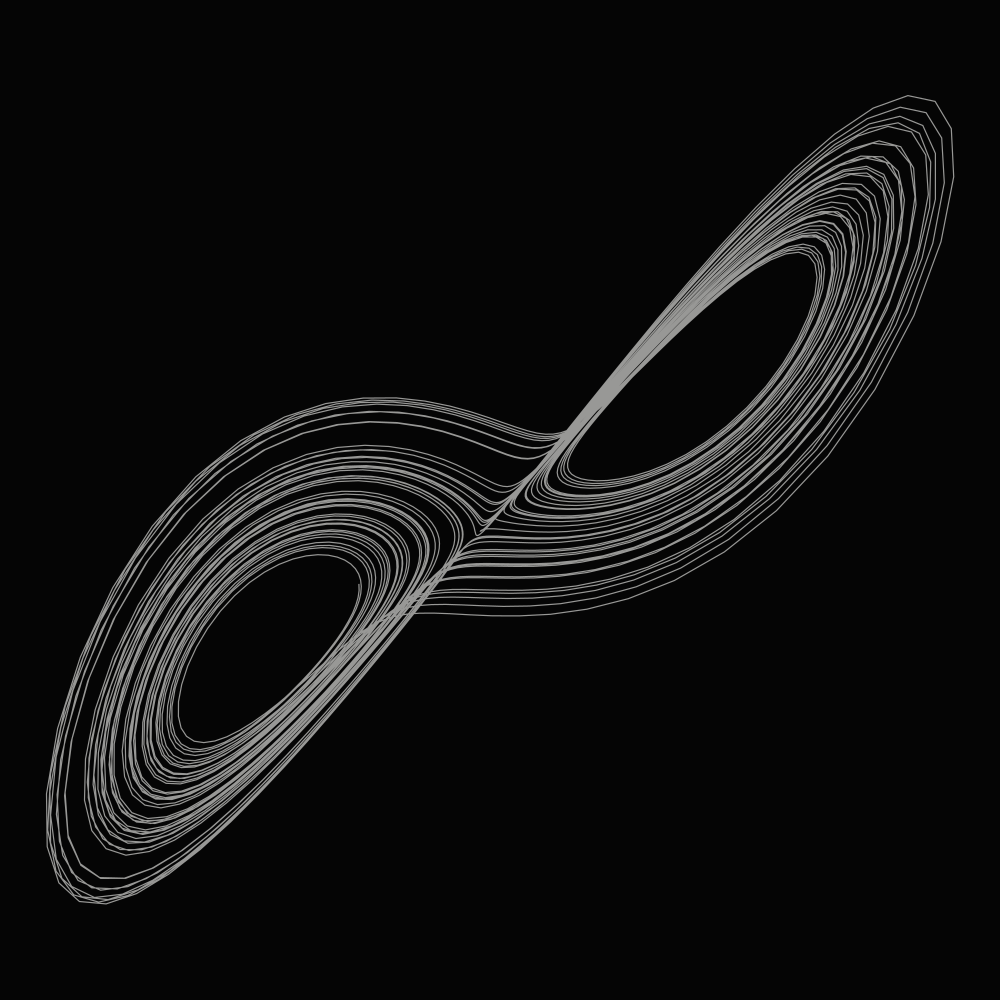
The Lorenz system began as a simplified model of atmospheric convection:
Its trajectory repeatedly circles one lobe and then the other. Nearby initial conditions separate rapidly, producing the familiar butterfly silhouette and the practical meaning of sensitive dependence on initial conditions.
Thomas’ cyclically symmetric attractor
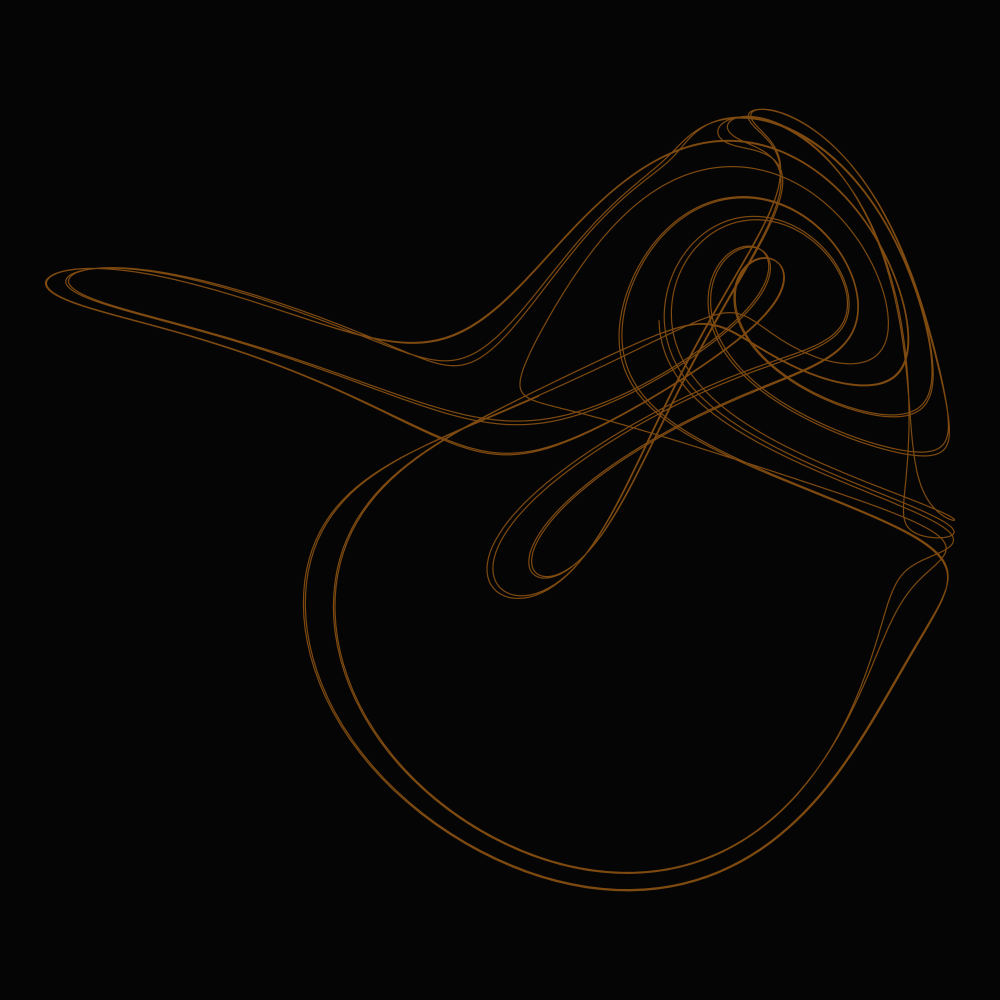
The orange system treats all three axes cyclically:
Each coordinate drives the next. The symmetry of that rule creates interlocking loops without giving any axis permanent priority.
Rössler system
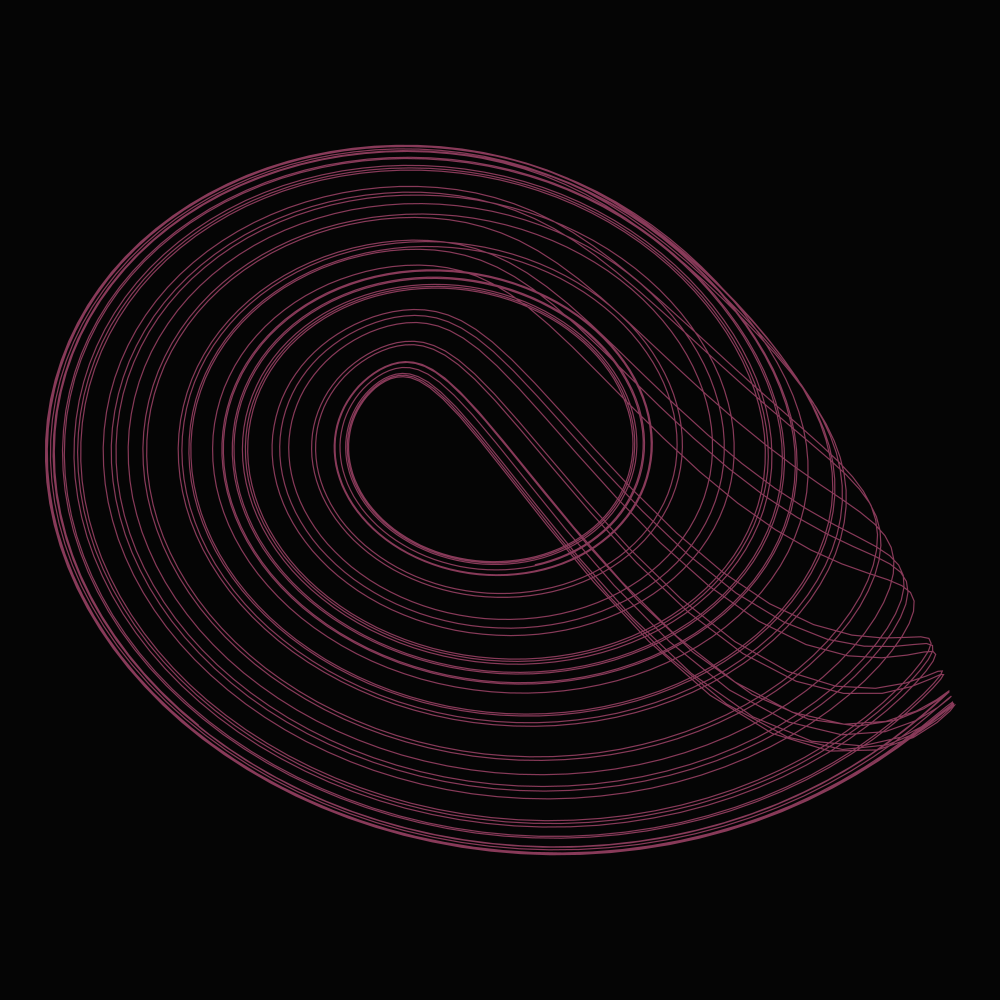
The Rössler system builds complicated behavior from an unusually compact rule:
Most of the path spirals near a plane. A nonlinear rise in the direction folds the orbit back over itself, preventing it from settling into a simple repeating cycle.
Aizawa attractor
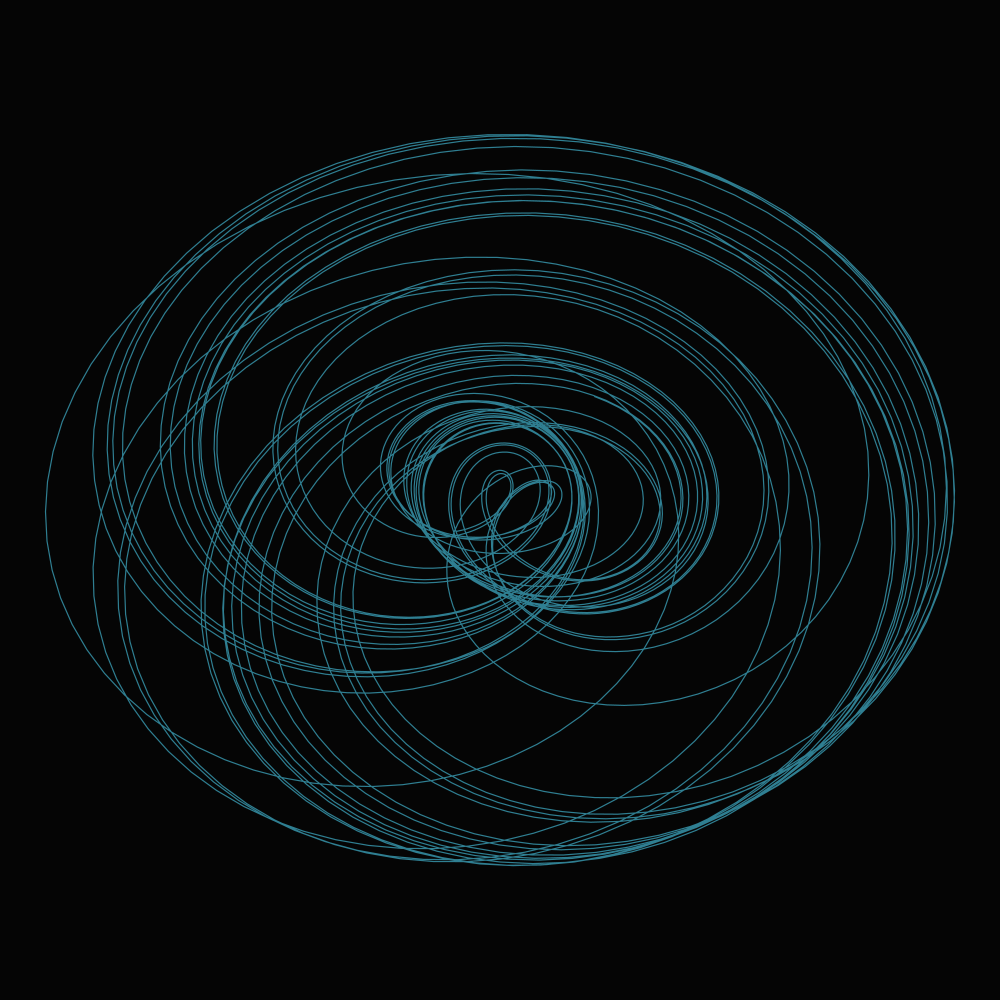
For the Aizawa system used here,
with . Rotation in the – plane combines with nonlinear vertical motion to form its layered, barrel-like structure.
Halvorsen attractor
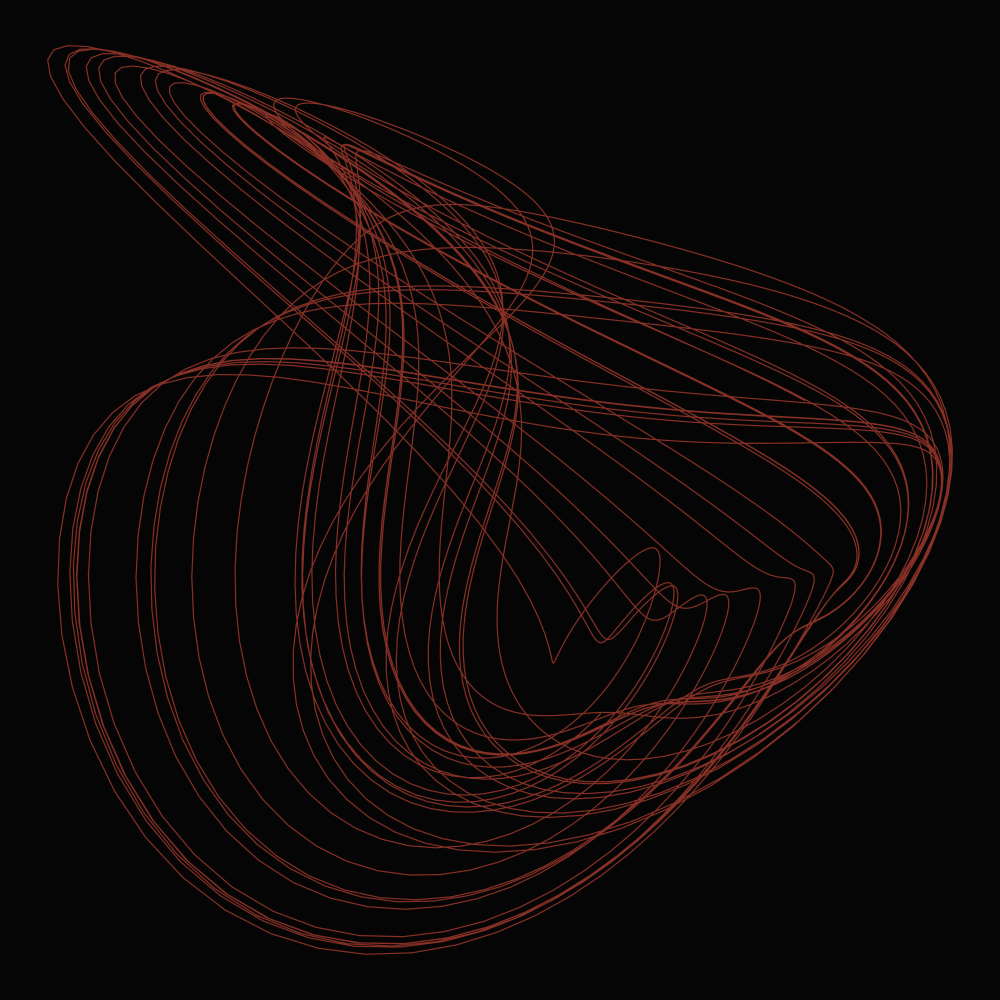
The red system is another cyclic rule, now with quadratic coupling:
That permutation symmetry produces three related lobes. The path is deterministic at every step, but its long-term motion remains aperiodic.
Chen’s attractor
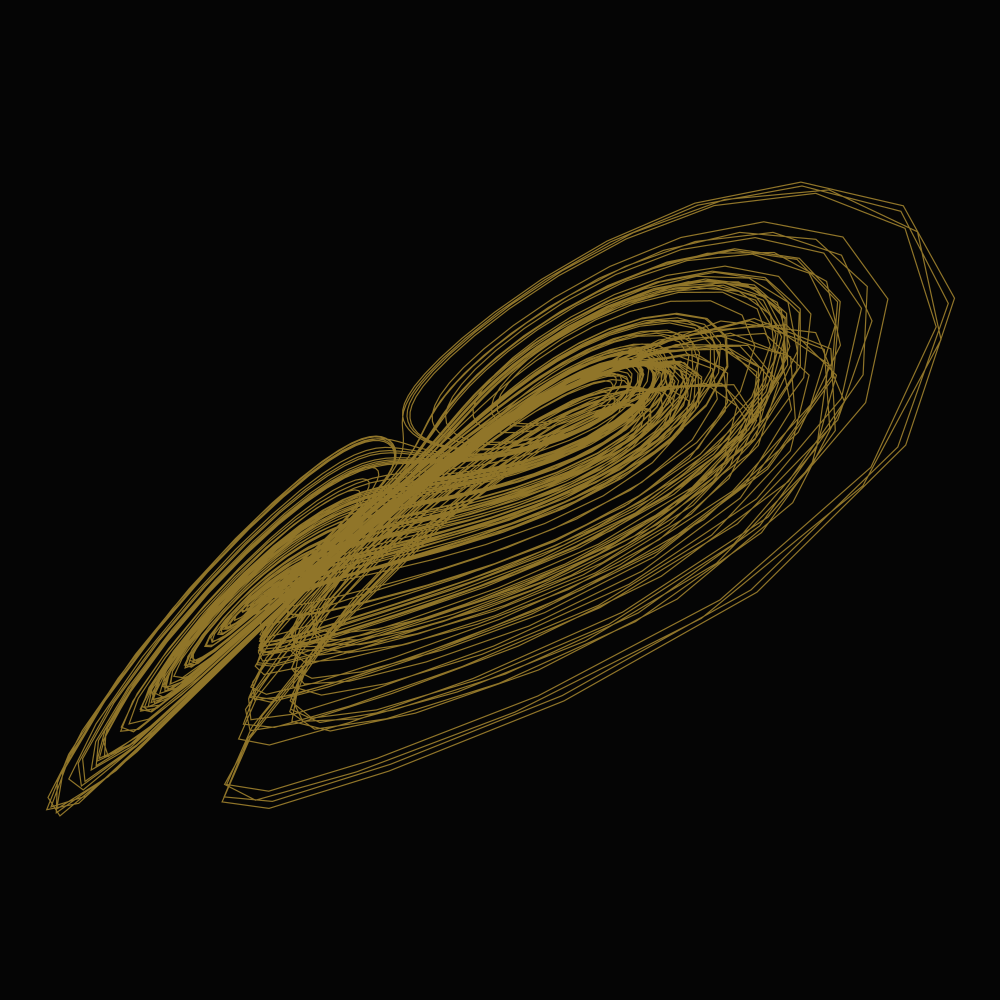
Discovered while looking for systems that were chaotic but not topologically equivalent to Lorenz’s, Chen’s attractor still folds around two lobes:
The two scrolls it traces have shown up outside pure mathematics too — as a keystream generator in a few chaos-based encryption schemes, which felt like a fitting bit of trivia for a security site.
Dadras attractor
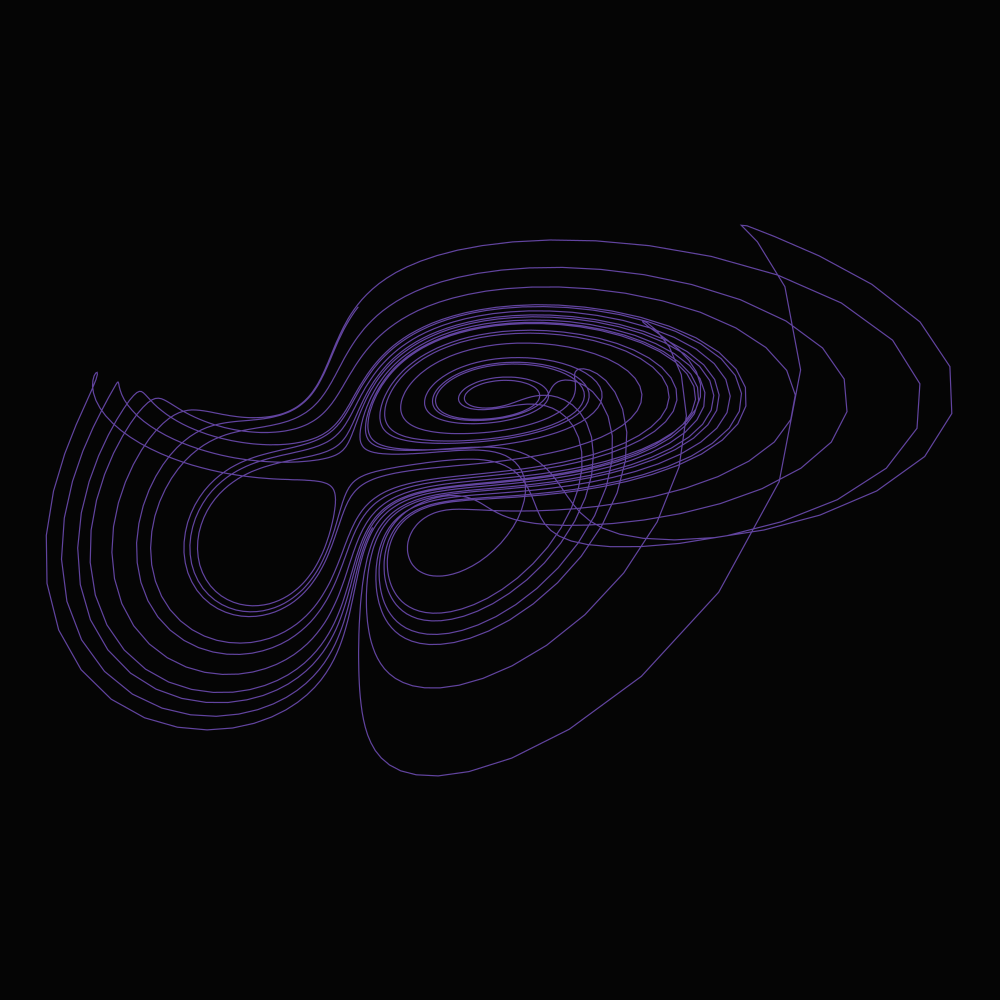
Published in 2009, the Dadras system is a reminder that new chaotic attractors are still being found, not just inherited from mid-century weather models:
Four cross-coupled nonlinear terms are enough to fold its trajectory into the saddle-shaped pair of wings shown above.
Chua’s circuit
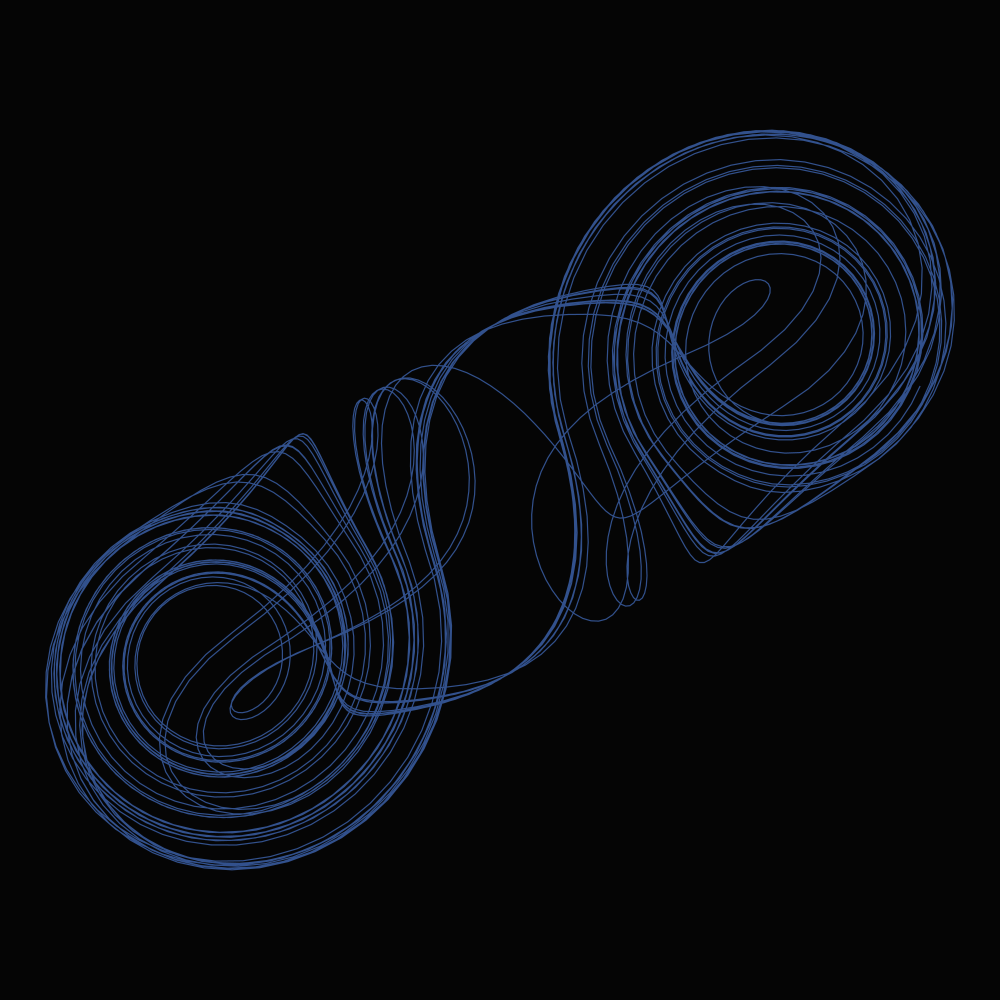
Chua’s circuit is unusual among these systems because it wasn’t just simulated — it was built:
Designed in 1983, it was the first chaotic attractor generated by an actual electronic circuit, built specifically to prove chaos could happen in real hardware and not only on paper.
Lü attractor
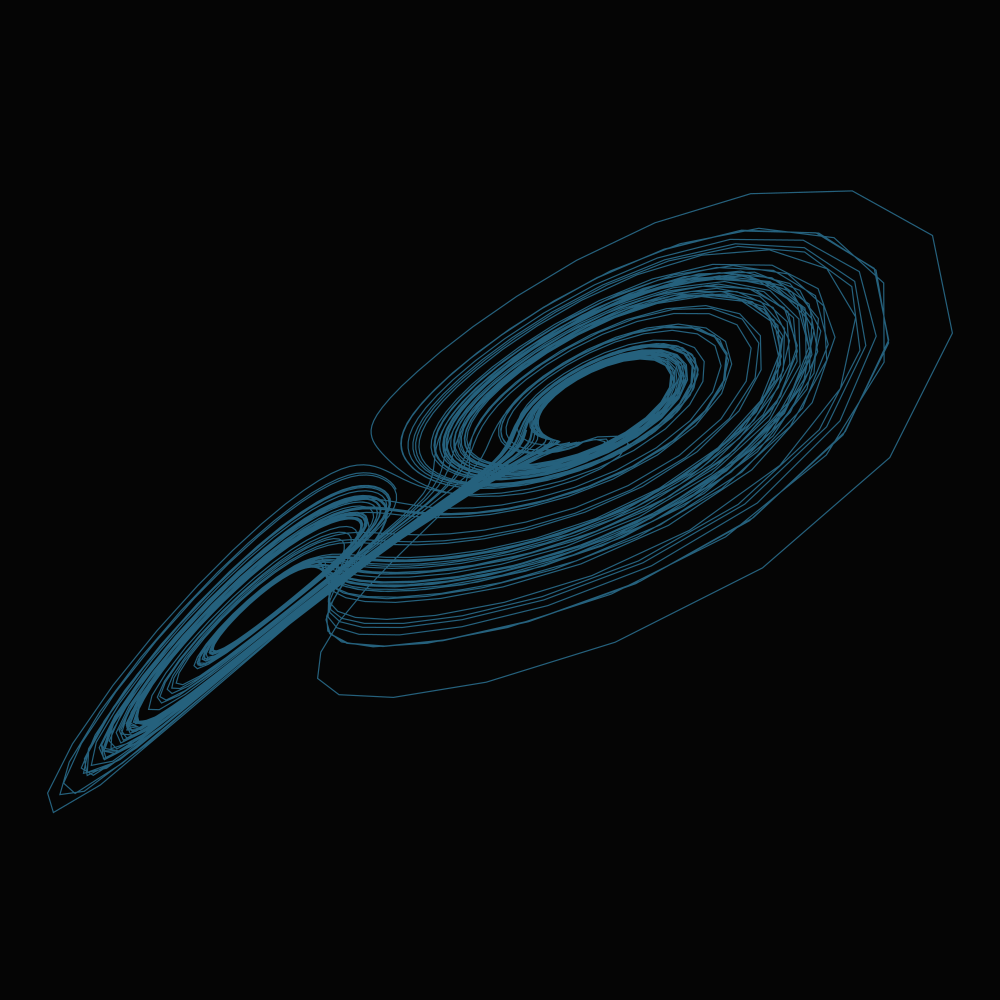
The Lü system sits mathematically between Lorenz and Chen, discovered while researchers were classifying which chaotic systems are secretly equivalent to one another under a change of coordinates.
Newton–Leipnik attractor
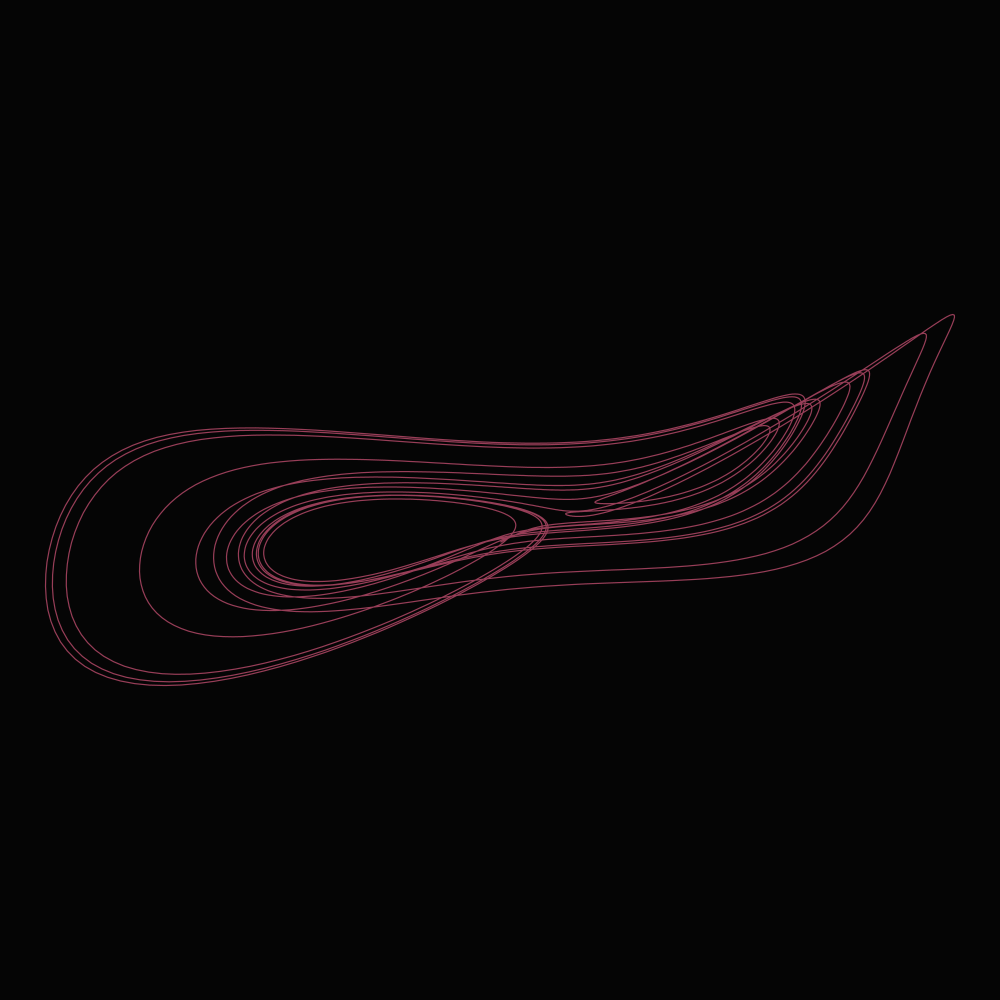
Originally written down to model how a spinning, slightly asymmetric rigid body — a tumbling satellite, say — tumbles chaotically rather than settling into a stable spin.
Sprott B attractor
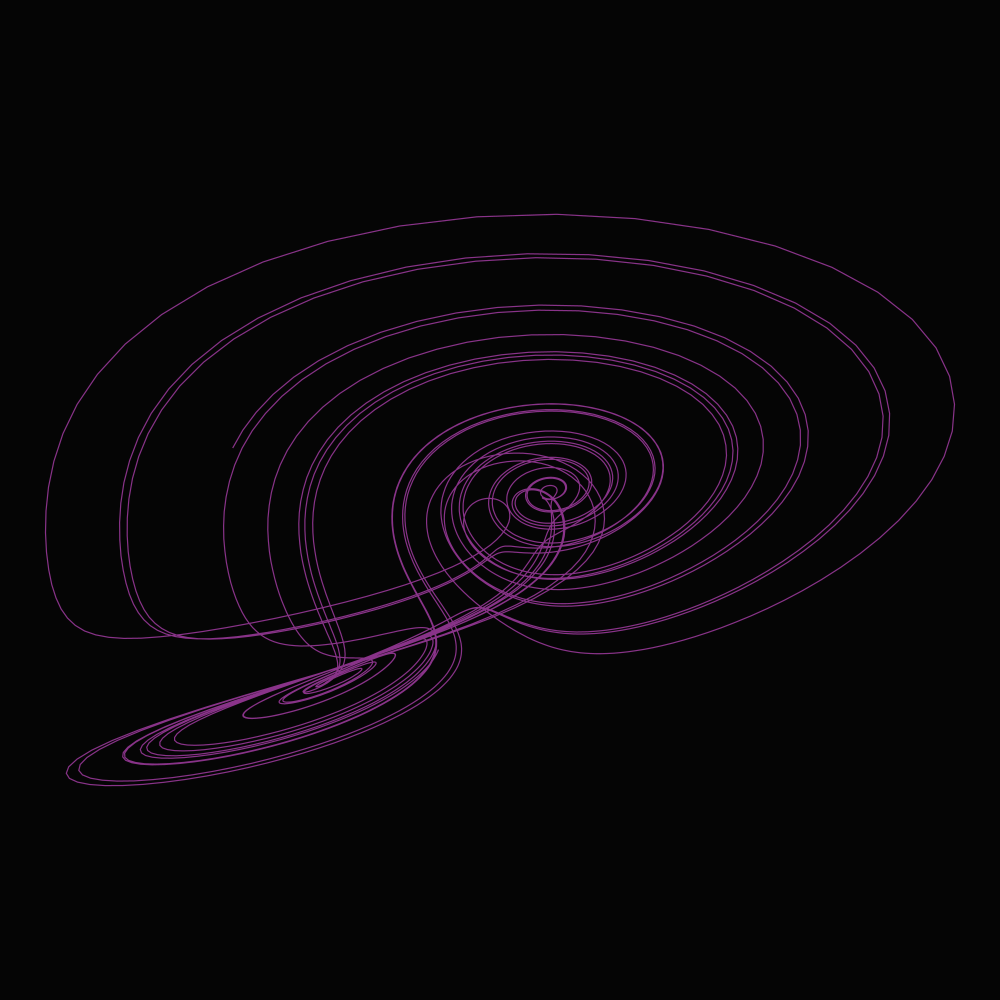
Found in 1994 by a brute-force computer search through thousands of simple quadratic equations — nobody derived this one from physics, a program just noticed it stayed chaotic.
Sprott–Linz F attractor
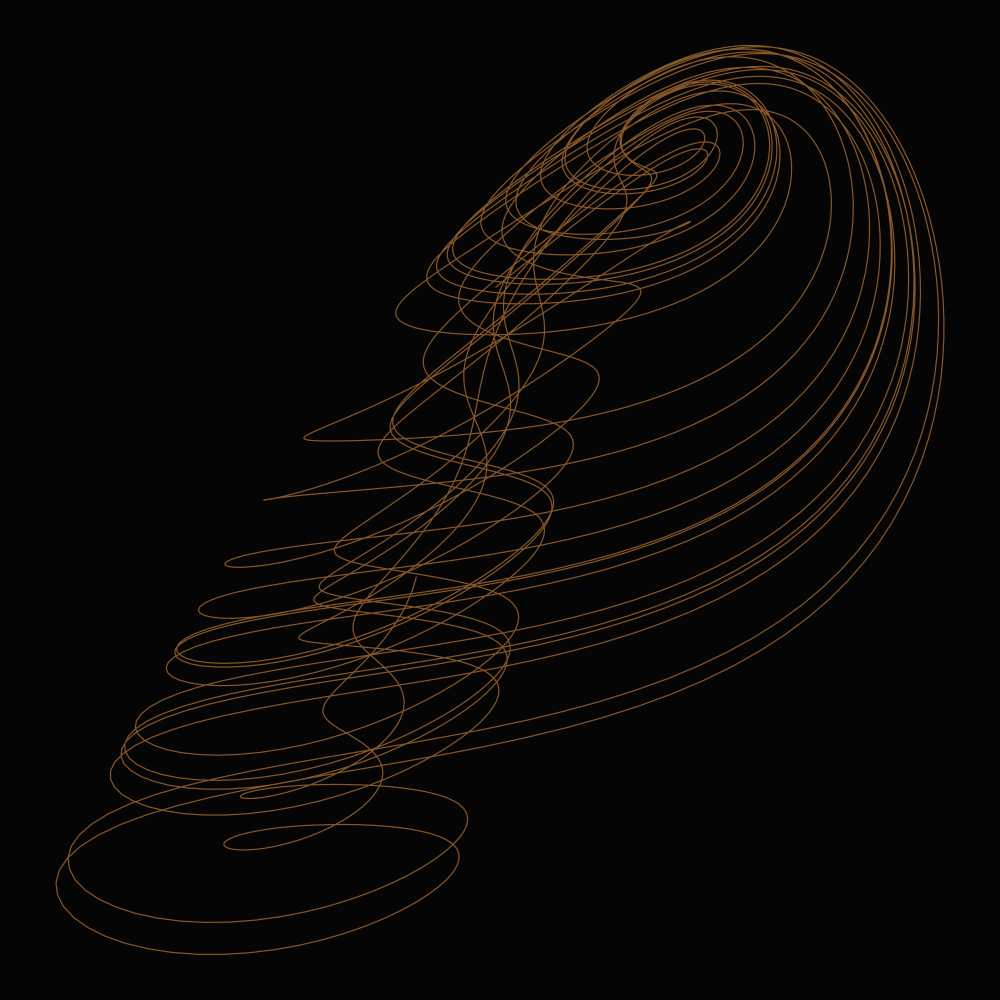
Part of a catalogue of “elegantly minimal” chaotic systems assembled by Sprott and Linz — this one needs only a single quadratic term to stay chaotic forever.
Burke–Shaw attractor
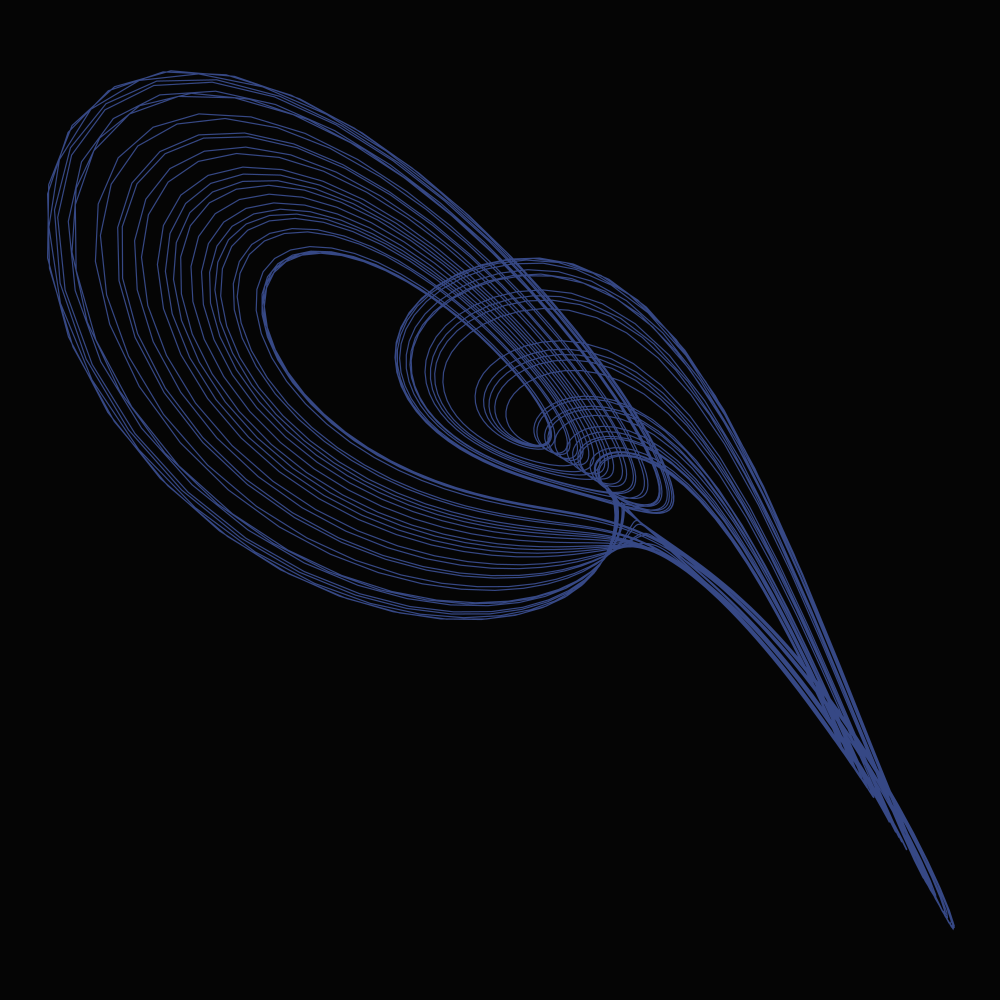
A variant born from studying Lorenz-style fluid convection, tuned until its two lobes flattened into this tight, ribbon-like shape.
Genesio–Tesi attractor
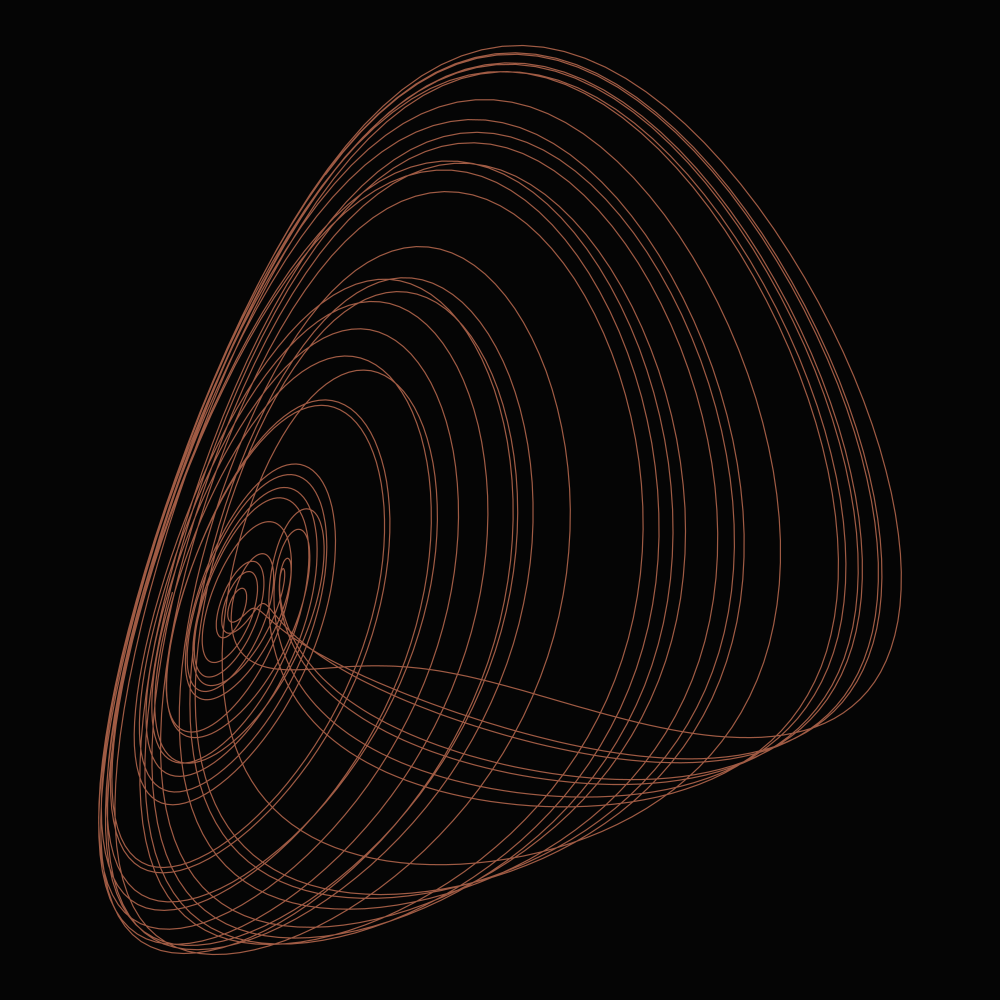
This one comes from control theory: engineers use this exact system as a standard test case for algorithms designed to tame chaotic feedback loops.
Rikitake dynamo
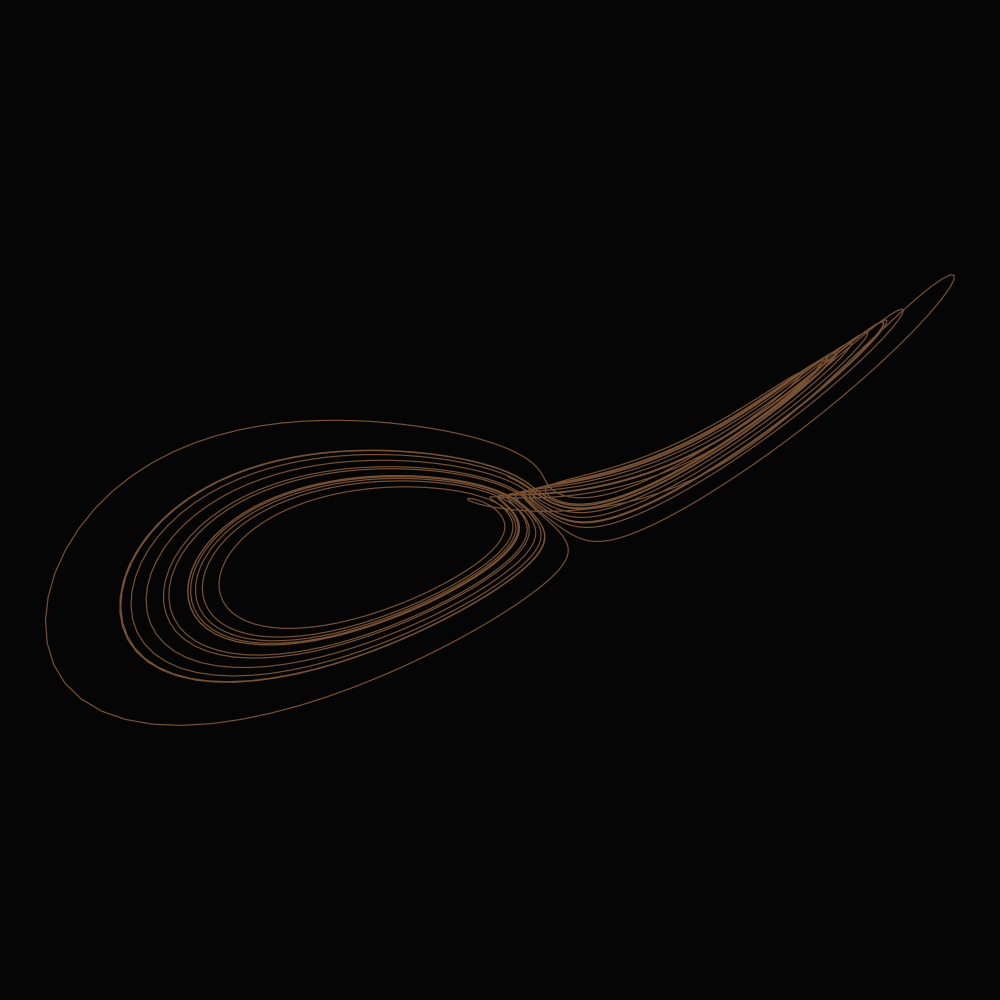
A simplified model of how Earth’s magnetic field spontaneously flips polarity every few hundred thousand years. The chaos traced here is the same chaos that eventually reverses your compass.
Why the background changes
No attractor belongs permanently to Home, Creations, Pieces, Now, or this page. On every page entry, the site chooses from the complete pool while excluding the drawing shown immediately before it. Each system keeps its own color and camera character. Random selection changes the encounter; the underlying equations do not change.
That tension is the point of Quandle.xyz: a small set of precise rules can make something that stays recognizable without becoming repetitive.